Intelligent care robot for hospitals, senior communities and public settings.
XIONGDA is a service robot for care and public settings that delivers medicine, meals and personal items while offering light companionship and wayfinding. Designed through participatory research, it features low-height, easy-reach interaction and a readable emotion language to make intent instantly clear.
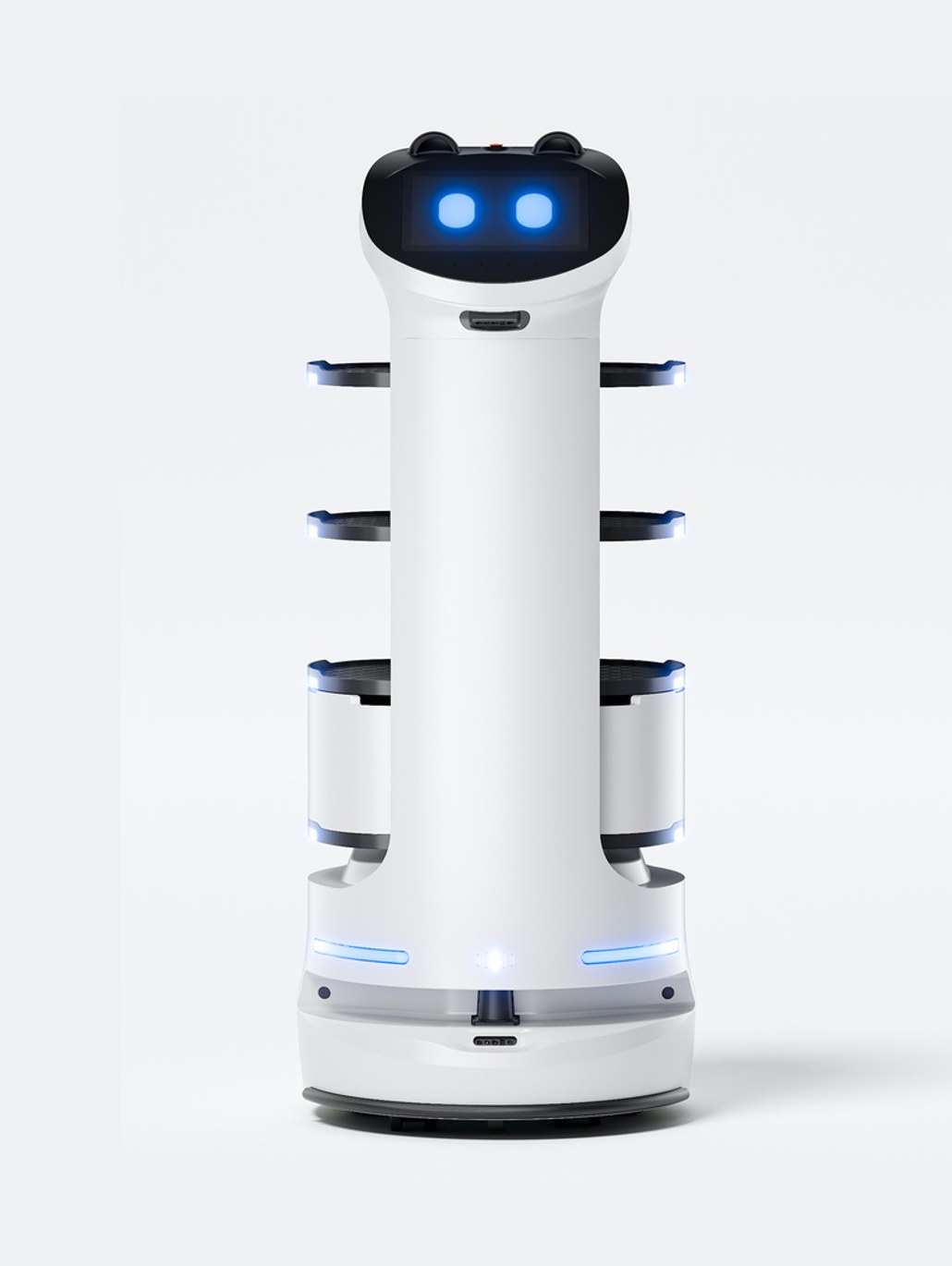
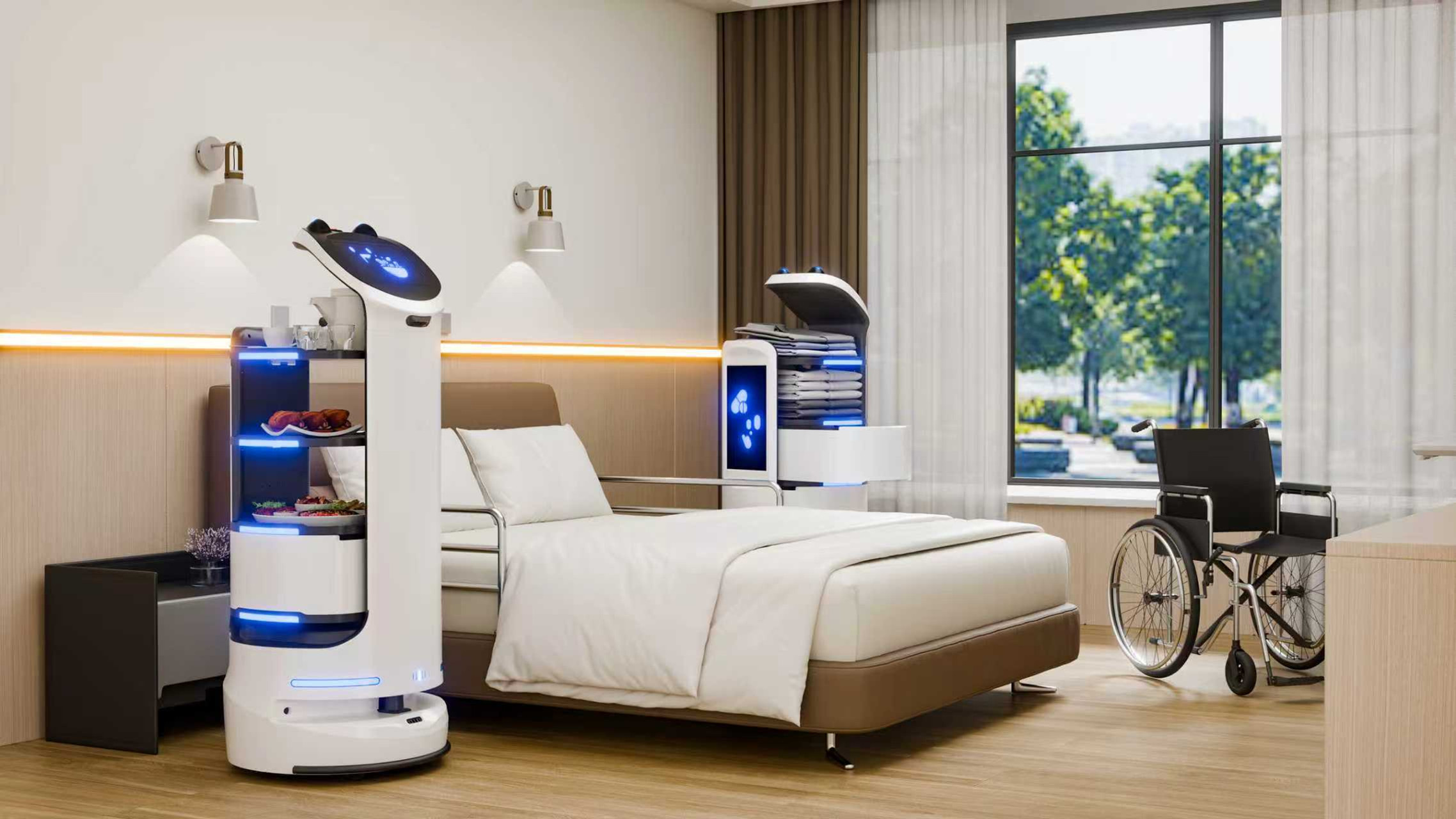
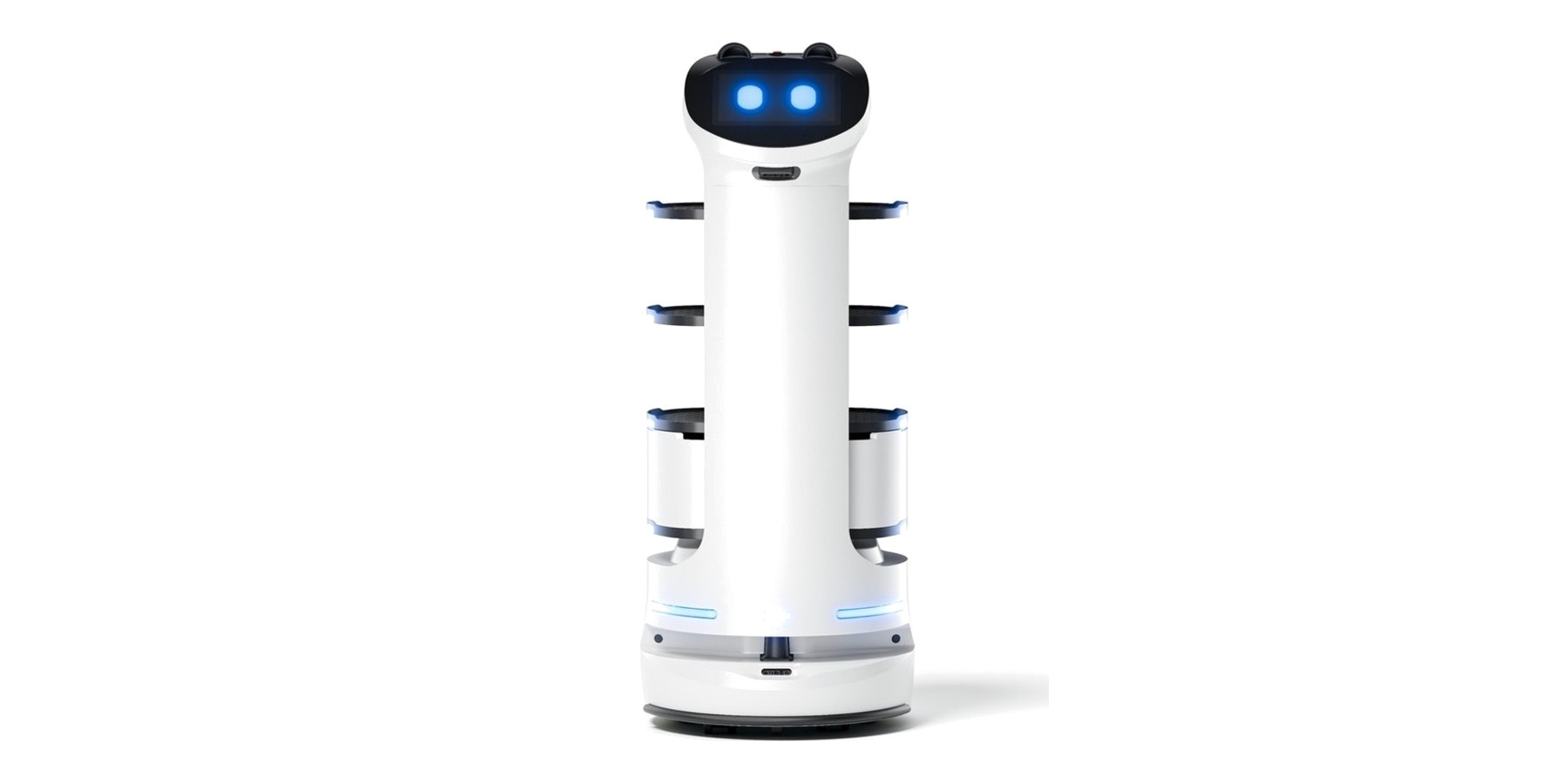
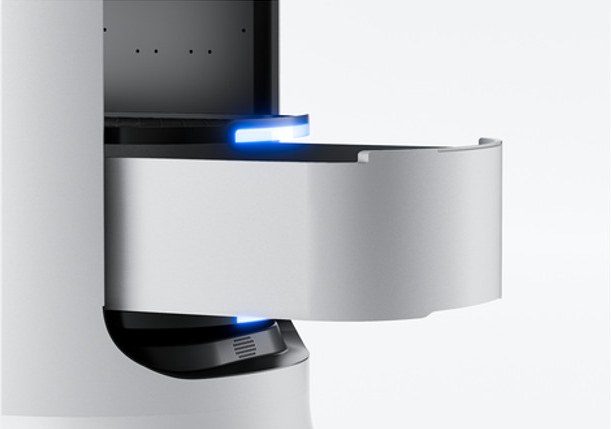
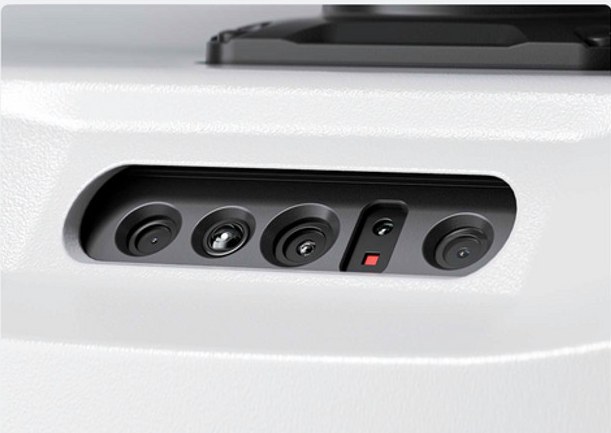
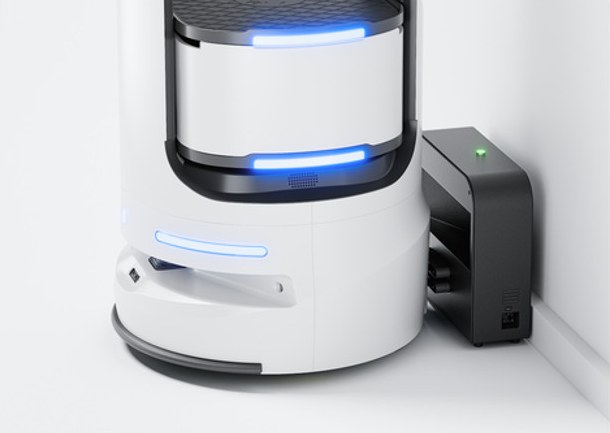
A lockable handover module protects privacy for drugs and belongings; the soft, panda-inspired body with hygienic ABS-PC surfaces feels safe and approachable. Fused LiDAR + vision and a quiet omni-wheel base enable smooth, polite movement, easing frontline workload and preserving user dignity.

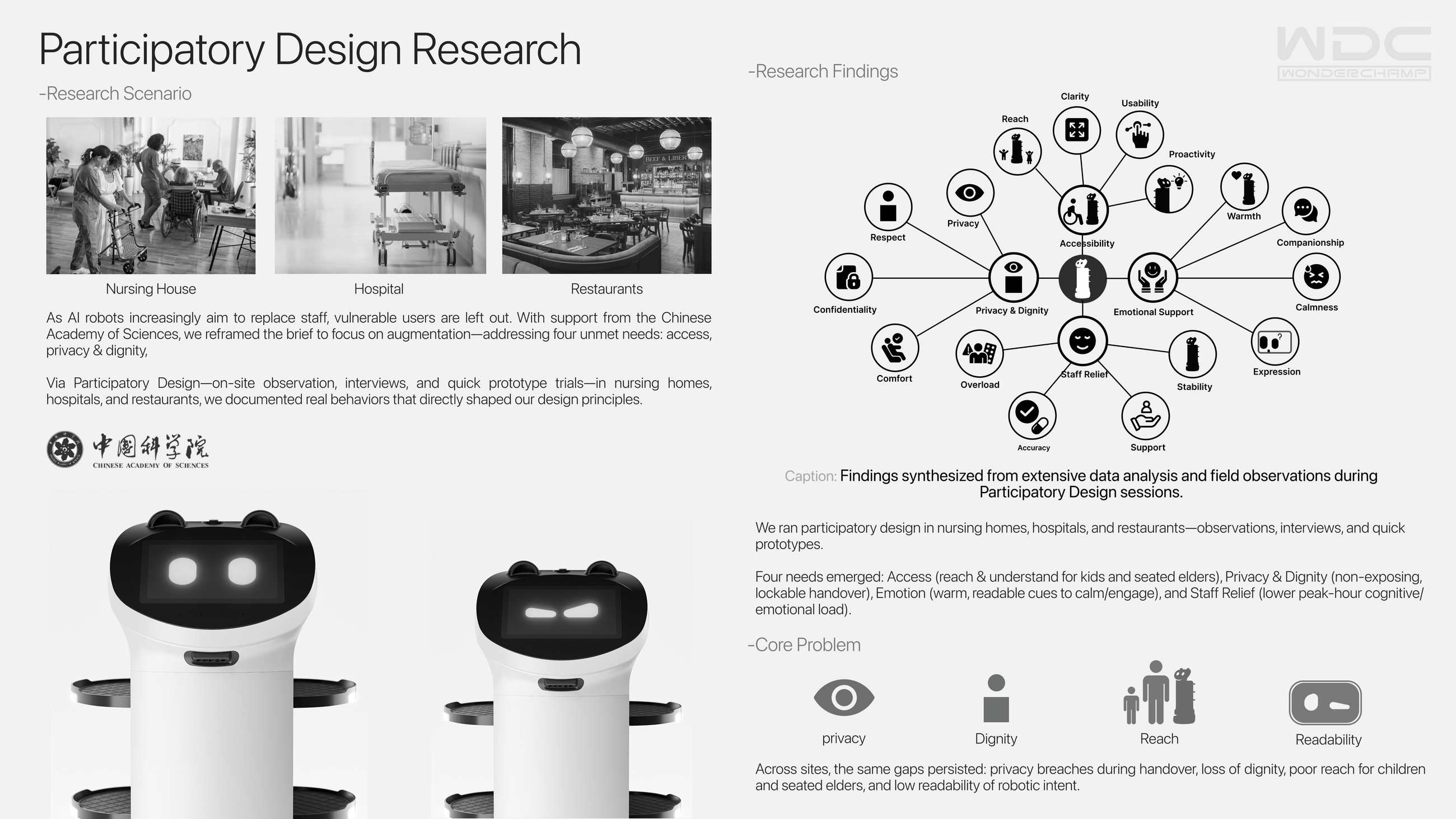
As AI robots increasingly aim to replace staff, vulnerable users are left out. With support from the Chinese Academy of Sciences, we reframed the brief to focus on augmentation — on-site observation, interviews and quick prototype trials with the people the robot would serve.
Four needs emerged: Access (reach and understand, for kids and seated elders), Privacy & Dignity (non-exposing, lockable handover), Emotion (warm, readable cues to calm and engage) and Staff Relief (lower peak-hour cognitive and emotional load).


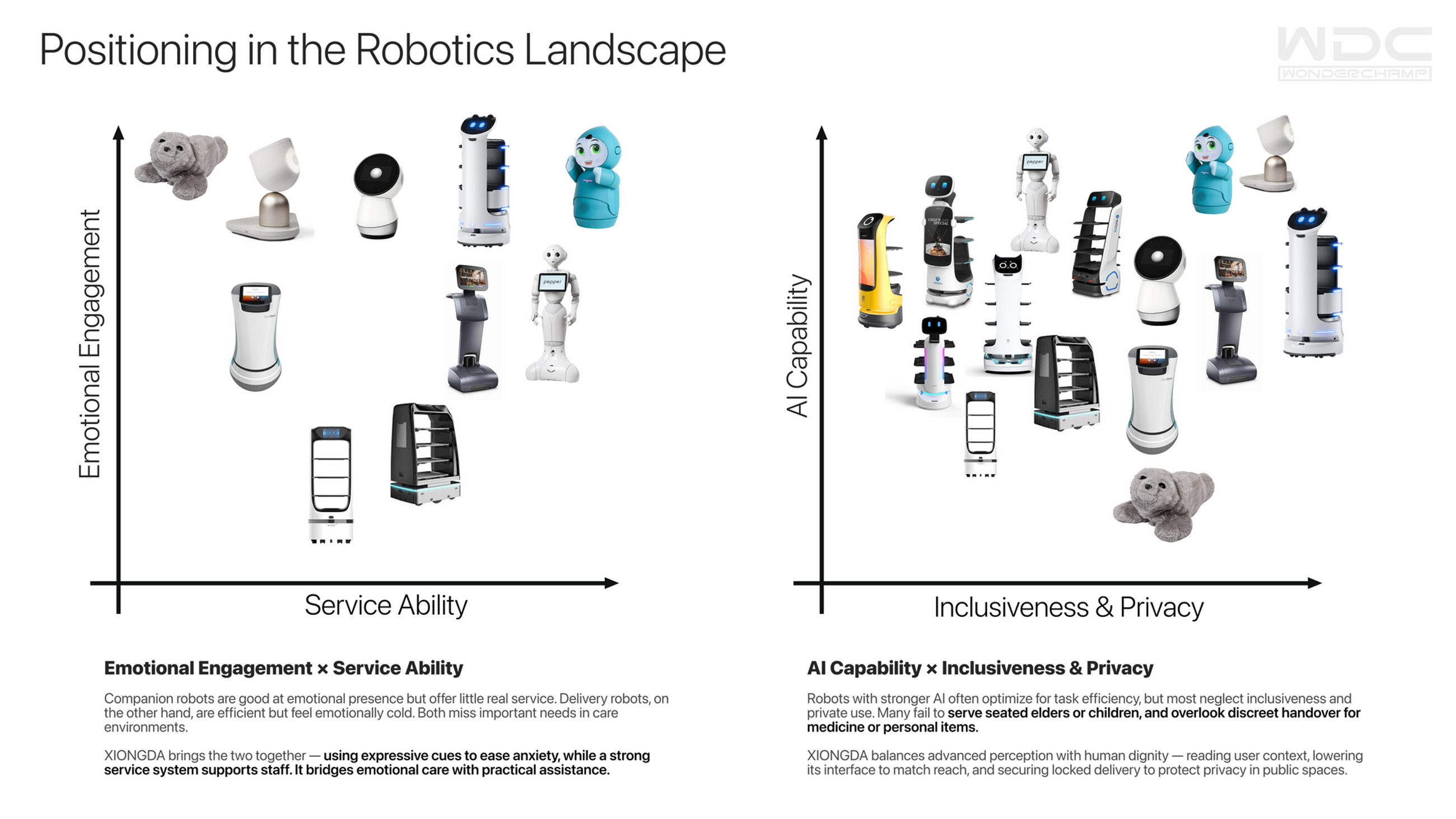
Companion robots are good at emotional presence but offer little real service; delivery robots are efficient but feel emotionally cold. XIONGDA brings the two together — expressive cues to ease anxiety, with a strong service system that supports staff.
Robots with stronger AI often optimise for task efficiency, but most neglect inclusiveness and private use. XIONGDA balances advanced perception with human dignity — reading user context, lowering its interface to match reach, and securing locked delivery to protect privacy in public spaces.

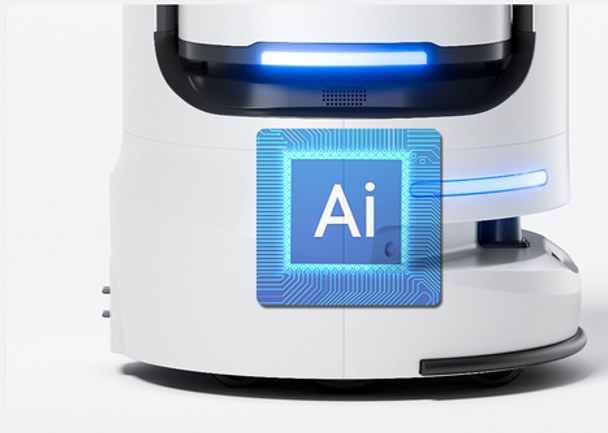
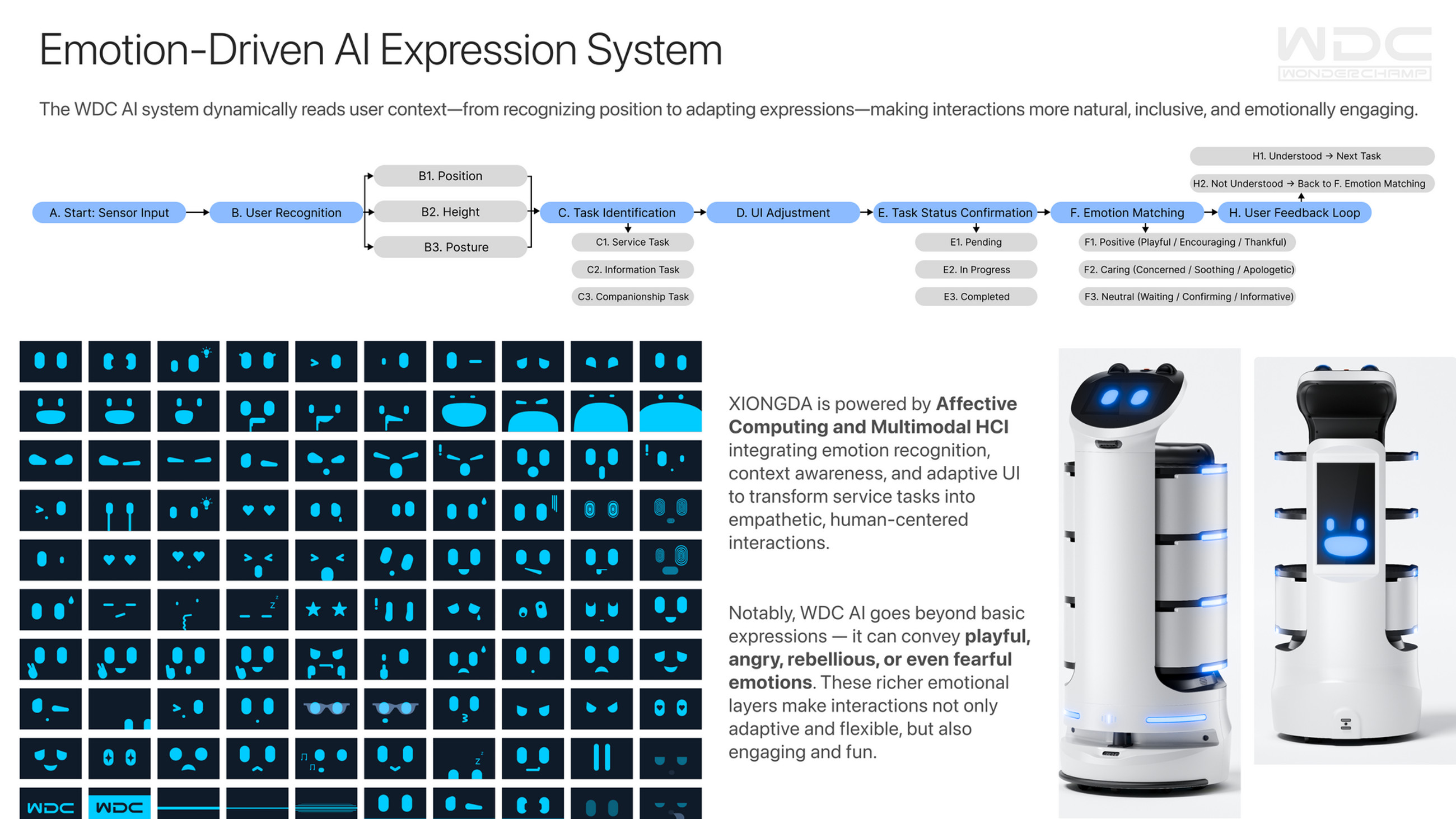
The WDC AI system reads user context — from recognising position to adapting expressions — so interactions feel natural, inclusive and emotionally engaging. Affective computing and multimodal HCI bring emotion recognition, context awareness and an adaptive UI together, turning service tasks into human-centred interactions.
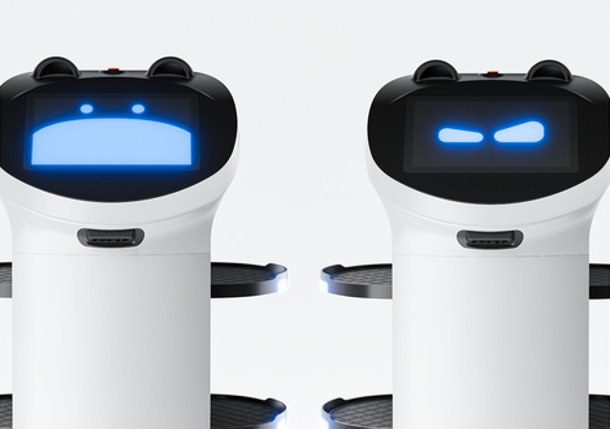
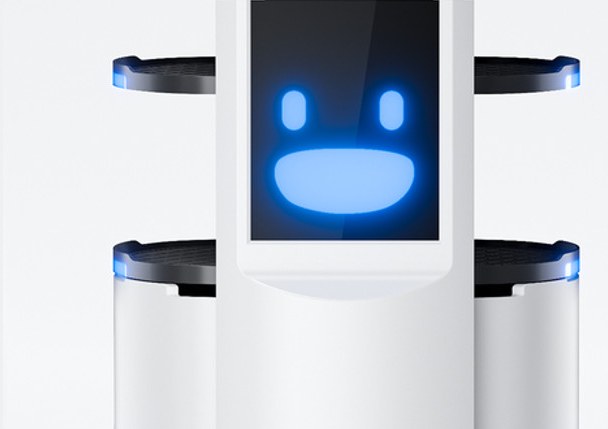
Beyond the basics, the expression set can convey playful, angry, rebellious or even fearful emotions — richer layers that make the robot adaptive, and fun to be around.

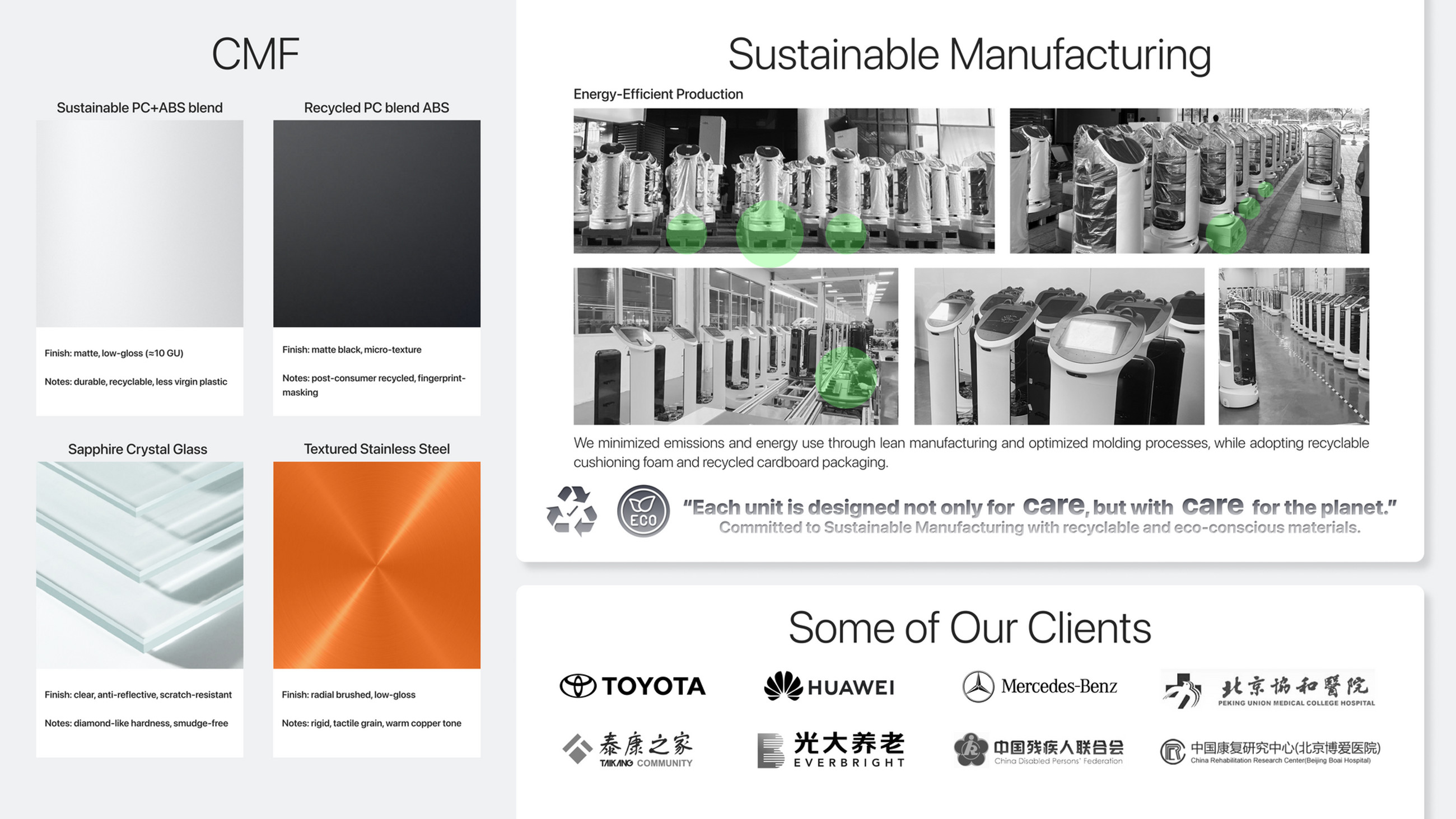
Lean manufacturing and optimised moulding cut emissions and energy use; cushioning foam is recyclable and the packaging is recycled cardboard.

Toyota · Huawei · Mercedes-Benz · Peking Union Medical College Hospital · Taikang Community · Everbright Senior Care · China Disabled Persons' Federation · China Rehabilitation Research Center
Tell us what you are building. We reply within two working days.
contact@onoideas.com